This tax guide for Indian YouTube creators in 2026 explains—in plain language—how ad revenue, brand deals, and affiliate income fit into income tax, when GST may apply, which ITR forms are common, deductions you should discuss with a chartered accountant, TDS on sponsorships, and how tax regimes compare. Tax law is personal and complex; use this as orientation, then confirm details with a qualified professional. For how earnings fit your overall creator business, see our YouTube channel business guide.
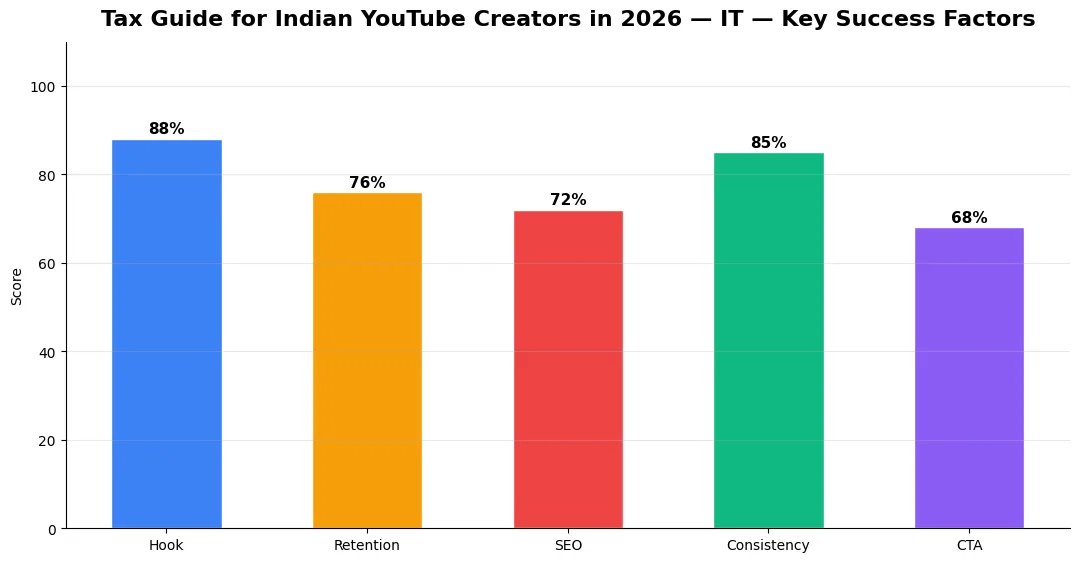
This guide covers tax guide for indian youtube in plain language for creators in India, the US, the UK, and global audiences. Whether you are starting out or refining a channel that already earns views, the frameworks below help you work smarter—not just post more often. Read through the charts and comparison table, then apply one change per week so improvements stick.
This guide covers tax guide for indian youtube in plain language for creators in India, the US, the UK, and global audiences. Whether you are starting out or refining a channel that already earns views, the frameworks below help you work smarter—not just post more often. Read through the charts and comparison table, then apply one change per week so improvements stick.
Income tax on YouTube and creator earnings
Income from Google AdSense, Indian or foreign brand deals, affiliates, and memberships is generally taxable in India for resident creators. Foreign remittances may involve forms and reporting rules your CA can file correctly. You must maintain books or records that support revenue and expenses. Many creators operate as individuals, while growing channels sometimes use proprietorships or companies for clarity—choice affects compliance workload.
Align tax planning with your monetization stack described in the YouTube monetization guide (2026) and earning beyond ad revenue so you forecast cash flow after tax.
GST applicability for creators
GST may apply when you supply services such as influencer promotions, dedicated videos, or bundled packages to Indian businesses crossing relevant turnover thresholds, or when you register voluntarily. Pure AdSense-style receipts have different treatment nuances your CA should map. Do not assume “online only” means GST-free; sponsorship invoices to companies often need GST analysis.
ITR forms, deductions, and TDS
Many creators file using forms suited to business or professional income (commonly discussed ITR forms for professionals include ITR-3 or ITR-4 under presumptive schemes where eligible—verify eligibility each year). Allowable deductions often include equipment depreciation, software subscriptions, studio rent share, crew payments, and a reasonable portion of internet and power—subject to documentation. Brands may deduct TDS under Section 194R or other sections depending on payment nature; claim credit in your return when applicable.
Keep a simple monthly checklist: export AdSense and affiliate payout reports, file brand invoices and contracts, and note foreign currency conversion rates on the day of credit. That discipline makes year-end filings faster and reduces surprises if the tax department asks for proof.
Old vs new tax regime (overview)
India offers optional tax regimes with different slab rates and deduction rules. The better choice depends on your deductions, investments, and income mix. A CA running a side-by-side estimate for your actual numbers beats any article table. Still, understanding that regimes trade lower rates for fewer deductions helps you ask smarter questions.
| Topic | What to remember | Typical action |
|---|---|---|
| Income tax | All taxable creator receipts must be reported | Track monthly payouts and invoices |
| GST | Depends on services, clients, and turnover | Consult CA before large brand deals |
| Deductions | Business expenses need proof | Save bills, contracts, bank statements |
| TDS | Brands may deduct at source | Collect certificates and reconcile Form 26AS |
Conclusion: Treat your channel like a small business: separate bank accounts, clean invoices, and professional tax help instead of guesswork. Tax laws and slabs change with each budget cycle, so an annual review with a chartered accountant keeps your ITR, GST, and TDS aligned with 2026 rules and your actual income mix.
Common Mistakes to Avoid in 2026
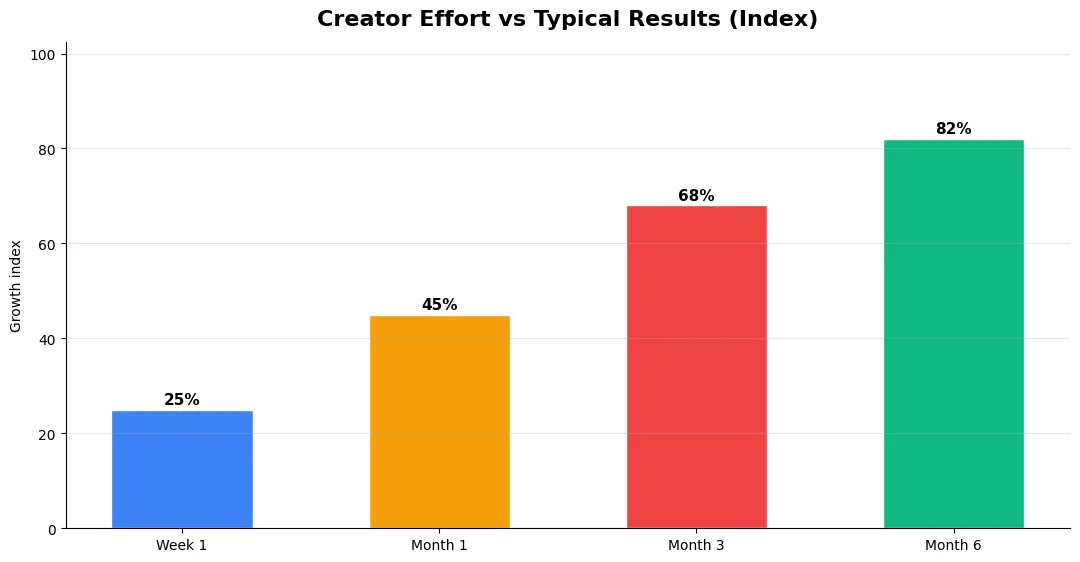
The fastest way to stall growth is copying trends without adapting them to your niche voice. Another frequent error is optimizing only for views while ignoring audience fit, which inflates vanity metrics but hurts monetization and brand deals later. Avoid posting on inconsistent schedules; algorithms and audiences both reward predictable cadence.
Do not neglect analytics review. Spend thirty minutes weekly on retention curves, traffic sources, and click-through rate on thumbnails. Small iterative fixes—tighter hooks, clearer titles, better pacing—often outperform chasing entirely new formats every week.
Advanced Tips for Competitive Niches
In saturated niches, specificity wins. Narrow your positioning until you can describe your ideal viewer in one sentence, then speak directly to that person in every title and hook. Collaborate with adjacent creators whose audiences overlap but are not identical—this expands reach without diluting brand identity.
Repurpose top performers into Shorts, community posts, and newsletter snippets to extract more value from proven ideas. Update evergreen videos when platforms change features; refreshed metadata and a pinned comment with the latest link can revive older assets.
Tools and Resources That Save Time
Invest in lightweight tools that reduce friction: a caption workflow, a thumbnail template system, and a title/description helper so metadata stays consistent. The YT Title Description Generator app helps you draft SEO-friendly titles and descriptions quickly when you batch-upload multiple videos.
Keep a swipe file of hooks, titles, and thumbnails that performed well in your niche—not to copy, but to analyze patterns. Pair that with YouTube Studio analytics and one external keyword or trend tool so creative decisions stay grounded in data.
Step-by-Step Workflow for 2026
Start by defining one clear outcome for every piece of content you publish. Map the viewer journey from the first frame to the subscribe or click action, and remove any step that does not move that journey forward. Batch your research, scripting, and B-roll capture so you are not context-switching between creative and administrative tasks every day.
Use a simple checklist before upload: title clarity, thumbnail readability on mobile, hook strength in the first three seconds, captions accuracy, and end-screen placement. Creators who treat upload as a quality gate—not a rush job—see compounding gains in retention and discovery over 2026.
| Level | Strategy | Typical outcome |
|---|---|---|
| Beginner approach | Copy trends blindly | Low retention, no brand |
| Structured approach | Test hooks + analyze data | Steady growth |
| Pro approach | Series + community loop | Higher LTV audience |
Tools and Resources That Save Time
Invest in lightweight tools that reduce friction: a caption workflow, a thumbnail template system, and a title/description helper so metadata stays consistent. The YT Title Description Generator app helps you draft SEO-friendly titles and descriptions quickly when you batch-upload multiple videos.
Keep a swipe file of hooks, titles, and thumbnails that performed well in your niche—not to copy, but to analyze patterns. Pair that with YouTube Studio analytics and one external keyword or trend tool so creative decisions stay grounded in data.
Advanced Tips for Competitive Niches
In saturated niches, specificity wins. Narrow your positioning until you can describe your ideal viewer in one sentence, then speak directly to that person in every title and hook. Collaborate with adjacent creators whose audiences overlap but are not identical—this expands reach without diluting brand identity.
Repurpose top performers into Shorts, community posts, and newsletter snippets to extract more value from proven ideas. Update evergreen videos when platforms change features; refreshed metadata and a pinned comment with the latest link can revive older assets.
Step-by-Step Workflow for 2026
Start by defining one clear outcome for every piece of content you publish. Map the viewer journey from the first frame to the subscribe or click action, and remove any step that does not move that journey forward. Batch your research, scripting, and B-roll capture so you are not context-switching between creative and administrative tasks every day.
Use a simple checklist before upload: title clarity, thumbnail readability on mobile, hook strength in the first three seconds, captions accuracy, and end-screen placement. Creators who treat upload as a quality gate—not a rush job—see compounding gains in retention and discovery over 2026.
Measuring Success — Metrics That Matter
Track average view duration and audience retention before raw view count. Rising retention tells you the content matches the promise of your title and thumbnail; falling retention signals a hook or pacing problem. Monitor click-through rate separately—high CTR with low retention usually means the packaging oversold the video.
For growth channels, watch subscriber conversion per thousand views and returning viewer percentage. For monetized channels, revenue per mille and watch time from high-value geographies matter more than viral spikes from low-monetization regions. Set monthly targets for two metrics only; too many KPIs dilute focus.
| Level | Strategy | Typical outcome |
|---|---|---|
| Beginner approach | Copy trends blindly | Low retention, no brand |
| Structured approach | Test hooks + analyze data | Steady growth |
| Pro approach | Series + community loop | Higher LTV audience |
Is YouTube AdSense income taxable in India in 2026?
Do all YouTubers need GST registration?
Can I deduct camera and laptop costs?
What is TDS on sponsorship payments?
Final Verdict — Tax Guide For Indian Youtube in 2026
Success with tax guide for indian youtube comes from clarity, consistency, and honest delivery on every title and thumbnail promise. Use the step-by-step workflow, avoid the common mistakes above, and measure retention before chasing viral spikes. Small weekly improvements compound into channel growth that lasts beyond a single trending moment.
- YouTube Monetization Guide for Creators in 2026
- How to Go Viral on YouTube Shorts in 2026
- Claude Opus 4.6 vs 4.7 vs 4.8 — AI Tools for Creators
Final Verdict — Tax Guide For Indian Youtube in 2026
Success with tax guide for indian youtube comes from clarity, consistency, and honest delivery on every title and thumbnail promise. Use the step-by-step workflow, avoid the common mistakes above, and measure retention before chasing viral spikes. Small weekly improvements compound into channel growth that lasts beyond a single trending moment.
Also Read: