Turning YouTube into a full-time income requires more than just ad revenue — it requires stacking multiple income streams, building audience trust, and treating content creation like a business from day one. This guide walks you through the exact steps to go from side-hustle creator to full-time YouTube income in 2026, with real numbers, timelines, and actionable strategies.
This guide covers how to turn youtube into in plain language for creators in India, the US, the UK, and global audiences. Whether you are starting out or refining a channel that already earns views, the frameworks below help you work smarter—not just post more often. Read through the charts and comparison table, then apply one change per week so improvements stick.
The Income Threshold: How Much Do You Need?
Before quitting your job, know your number. For most Indian creators, a comfortable full-time switch requires ₹50,000-1,00,000/month in consistent YouTube income for at least 3-6 months. This should come from multiple revenue streams, not just AdSense — because ad revenue fluctuates with CPM rates, seasonality, and algorithm changes. A creator earning ₹30,000 from ads, ₹20,000 from memberships, and ₹30,000 from one monthly sponsorship has a more stable ₹80,000/month than someone earning ₹80,000 purely from ads.
Phase 1: Building the Foundation (0 to 1,000 Subscribers)
Focus entirely on content quality and finding your niche. Post 2-3 videos per week consistently. Use YouTube SEO to target low-competition long-tail keywords — this is where free AI tools for titles and descriptions save massive time. Don’t worry about monetization yet; build a library of 50+ searchable videos that compound over time. This phase typically takes 3-6 months for dedicated creators. Shorts can accelerate subscriber growth, but your long-form library is what generates lasting value.
Phase 2: Monetization Activation (1K to 10K Subscribers)
Once you hit 1,000 subscribers and 4,000 watch hours, join YPP immediately. Enable all revenue features: ads, Jewels, memberships, and Shopping if applicable. Start creating sponsored content — even micro-sponsorships from small brands pay ₹5,000-15,000 per video at this stage. Build your media kit with channel analytics, audience demographics, and engagement rates. This is also when you should start building an email list through lead magnets (free templates, checklists, or guides) mentioned in your videos.
Phase 3: Revenue Diversification (10K to 100K Subscribers)
This is where full-time income becomes realistic. At 10K-50K subscribers in a valuable niche, your monthly income should look like: ₹20,000-50,000 from ads, ₹10,000-30,000 from memberships, ₹10,000-50,000 from sponsorships, and ₹5,000-20,000 from Shopping affiliates. Add a digital product — a course, template pack, or ebook — and you can hit ₹1,00,000+ monthly. Enable YouTube’s auto-dubbing to expand to international audiences and grow your view base without extra work.
YouTube Full-Time Income Roadmap
| Phase | Subscriber Range | Timeline | Monthly Income | Primary Focus |
|---|---|---|---|---|
| Foundation | 0 – 1K | 3-6 months | ₹0 | Content quality + SEO |
| Activation | 1K – 10K | 6-12 months | ₹5,000 – 30,000 | YPP + first sponsors |
| Diversification | 10K – 50K | 12-18 months | ₹30,000 – 1,00,000 | Multiple revenue streams |
| Scaling | 50K – 100K+ | 18-24 months | ₹1,00,000 – 5,00,000+ | Team building + products |
Common Mistakes That Prevent Full-Time Income
The biggest mistake is relying solely on AdSense — it’s the least controllable and most volatile revenue stream. Second is inconsistency: skipping uploads kills algorithmic momentum faster than anything else. Third is ignoring metadata optimization: proper titles, descriptions, tags, and thumbnails can double your views without changing your content quality. Use tools like YT Title Description Generator to ensure every upload is fully optimized. Fourth is burnout from unsustainable production schedules — batch create and take real breaks.
Final Verdict
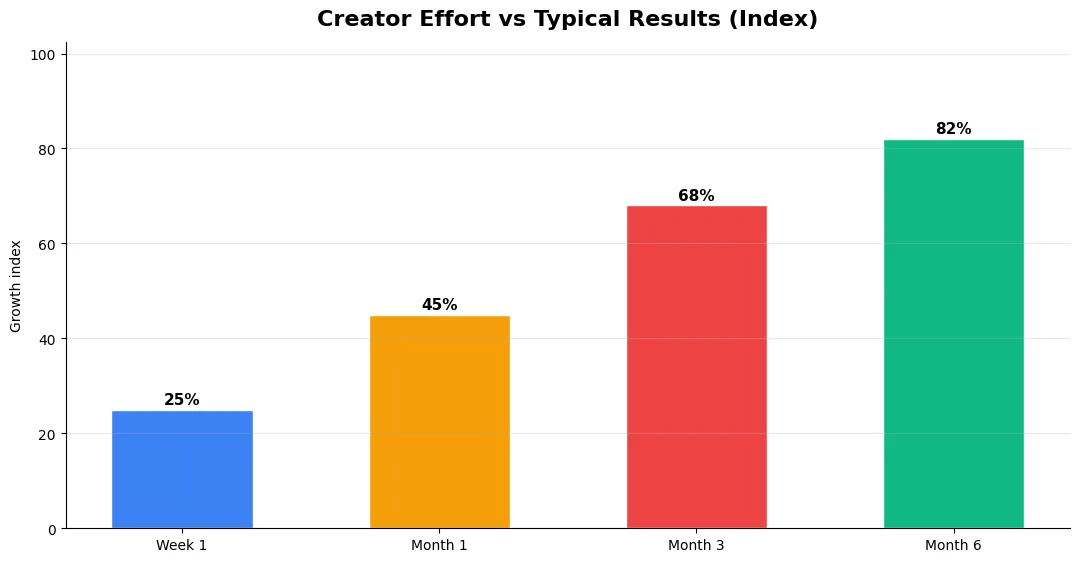
Full-time YouTube income is achievable in 18-24 months for creators who are strategic, consistent, and diversified. The formula is simple: build a searchable content library, join YPP at 1K subs, stack revenue streams as you grow, and never stop optimizing. The creators who make it aren’t necessarily the most talented — they’re the most consistent and business-minded.
Tools and Resources That Save Time
Invest in lightweight tools that reduce friction: a caption workflow, a thumbnail template system, and a title/description helper so metadata stays consistent. The YT Title Description Generator app helps you draft SEO-friendly titles and descriptions quickly when you batch-upload multiple videos.
Keep a swipe file of hooks, titles, and thumbnails that performed well in your niche—not to copy, but to analyze patterns. Pair that with YouTube Studio analytics and one external keyword or trend tool so creative decisions stay grounded in data.
Measuring Success — Metrics That Matter
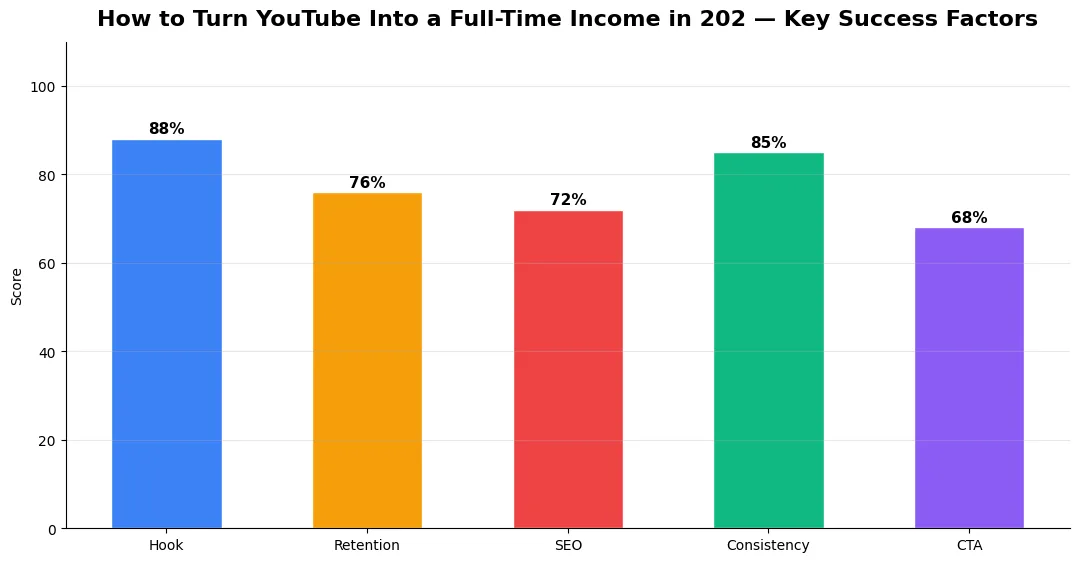
Track average view duration and audience retention before raw view count. Rising retention tells you the content matches the promise of your title and thumbnail; falling retention signals a hook or pacing problem. Monitor click-through rate separately—high CTR with low retention usually means the packaging oversold the video.
For growth channels, watch subscriber conversion per thousand views and returning viewer percentage. For monetized channels, revenue per mille and watch time from high-value geographies matter more than viral spikes from low-monetization regions. Set monthly targets for two metrics only; too many KPIs dilute focus.
Advanced Tips for Competitive Niches
In saturated niches, specificity wins. Narrow your positioning until you can describe your ideal viewer in one sentence, then speak directly to that person in every title and hook. Collaborate with adjacent creators whose audiences overlap but are not identical—this expands reach without diluting brand identity.
Repurpose top performers into Shorts, community posts, and newsletter snippets to extract more value from proven ideas. Update evergreen videos when platforms change features; refreshed metadata and a pinned comment with the latest link can revive older assets.
Step-by-Step Workflow for 2026
Start by defining one clear outcome for every piece of content you publish. Map the viewer journey from the first frame to the subscribe or click action, and remove any step that does not move that journey forward. Batch your research, scripting, and B-roll capture so you are not context-switching between creative and administrative tasks every day.
Use a simple checklist before upload: title clarity, thumbnail readability on mobile, hook strength in the first three seconds, captions accuracy, and end-screen placement. Creators who treat upload as a quality gate—not a rush job—see compounding gains in retention and discovery over 2026.
| Level | Strategy | Typical outcome |
|---|---|---|
| Beginner approach | Copy trends blindly | Low retention, no brand |
| Structured approach | Test hooks + analyze data | Steady growth |
| Pro approach | Series + community loop | Higher LTV audience |
How long does it take to earn full-time income from YouTube?
How much do you need to earn from YouTube to go full-time?
Can small YouTube channels earn full-time income?
What is the best revenue stream for YouTube creators?
Final Verdict — How To Turn Youtube Into in 2026
Success with how to turn youtube into comes from clarity, consistency, and honest delivery on every title and thumbnail promise. Use the step-by-step workflow, avoid the common mistakes above, and measure retention before chasing viral spikes. Small weekly improvements compound into channel growth that lasts beyond a single trending moment.
Also Read: