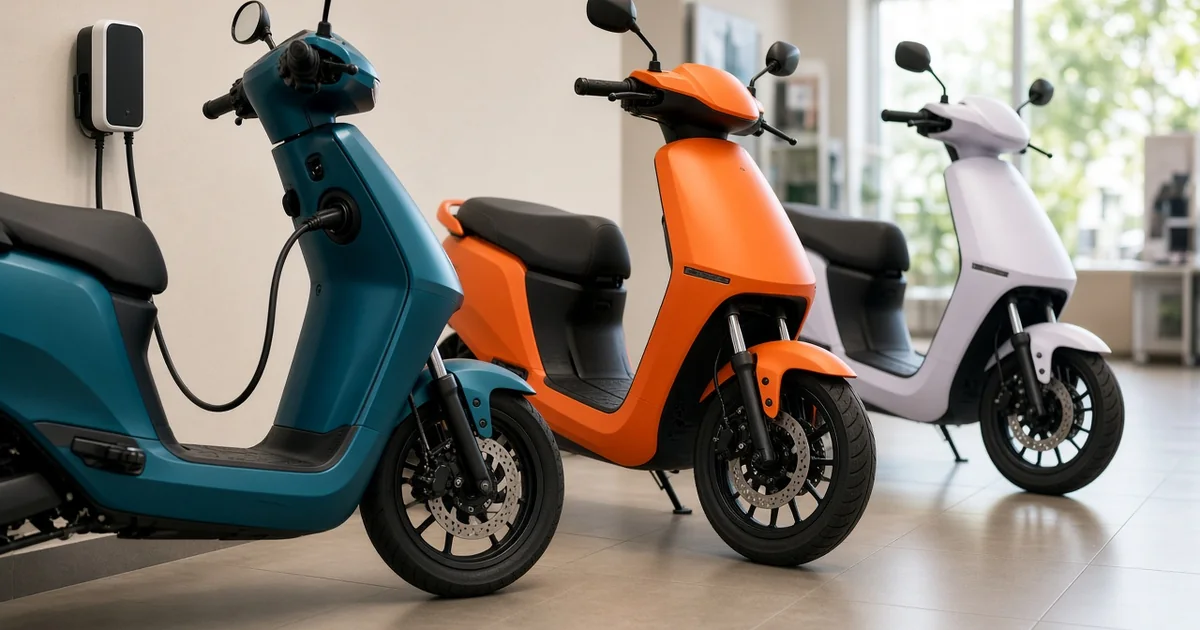
India registered about 3.55 lakh electric vehicles in October 2026, the highest monthly total the country has recorded. What are the details behind the record high Indian electric vehicle sales in October? Dealer data shows every EV segment had its best October ever, total EV retail rose 44.88% from a year earlier, and electric two-wheelers made up almost two thirds of the volume.
The numbers below are retail registrations from the government Vahan portal, compiled by the Federation of Automobile Dealers Associations (FADA) and released on 6 November 2026. A vehicle counts when it is registered to a buyer at an RTO, not when a factory ships it to a dealer. Company press releases usually quote factory dispatches, so their monthly figures will not match these.
What are the details behind the record high Indian electric vehicle sales in October
| Segment | October 2026 registrations | Change vs October 2025 | EV share of segment |
|---|---|---|---|
| Electric two-wheelers | 2,24,064 | +48.49% | 9.7% (11.6% in September) |
| Electric three-wheelers | 88,570 | +24.76% | 62.6% (64.9% in September) |
| Electric passenger vehicles | 37,049 | +76.47% | 7.3% (8.5% in September) |
| Electric commercial vehicles | 4,942 | +162.3% | 4.29% (4.04% in September) |
| All EVs | About 3,55,000 | +44.88% | About 11.5% (about 6% a year earlier) |
The four segment figures add up to 3,54,625 units, which FADA rounds to 3.55 lakh. FADA says October was the best October on record for electric two-wheelers, three-wheelers, passenger vehicles, and commercial vehicles. Across the whole vehicle market, roughly one in nine vehicles registered in October was electric, against about one in seventeen a year earlier.
Why October set a record
Festive buying
Navratri began on 11 October and Dussehra fell on 20 October, two dates many Indian families choose for bringing a new vehicle home. Dhanteras and Diwali fall in November this year, so part of the festive buying window had not yet opened when the October count closed. FADA put total vehicle retail for October at about 31.7 lakh units across all fuel types.
Fuel prices, range, and the price gap
“Demand ran ahead of supply this month,” FADA president Sai Giridhar said. He linked buyer interest to high petrol and diesel prices, longer EV driving ranges, and a smaller price difference between electric and conventional vehicles. He also said availability, not demand, was now the main limit on EV sales.
Running costs for commercial buyers
For three-wheelers, JMK Research credits better access to loans and a lower total cost of ownership. Auto-rickshaw and cargo operators drive many kilometres a day, so savings on fuel and maintenance add up faster for them than for a private scooter owner.
A steady climb, not a one-month spike
The Times of India reported that EV registrations had stayed above 3 lakh for five months in a row. Flash Finance’s Vahan tracker counts 28.94 lakh EV registrations from January to October 2026, 51.1% more than in the same ten months of 2025.
Why EV share fell in a record month
EV share fell from September in three of the four segments, even though EV volumes went up. The rest of the market grew faster. Vahan data compiled by EVGyan shows total two-wheeler registrations jumped from 18.02 lakh in September to 23.20 lakh in October. Electric two-wheelers rose too, but by much less, so their share slipped from 11.58% to 9.65%.
FADA blames supply constraints. JMK Research adds that festive discounts on petrol two-wheelers may have pulled buyers that way. Commercial vehicles were the only segment where EV share rose from September. Compared with a year ago the trend is still clearly up. The electric share of two-wheelers in October 2025 was 4.66%, less than half the latest figure.
Electric two-wheelers: TVS widens its lead
| Brand | October 2026 registrations | Change vs October 2025 |
|---|---|---|
| TVS Motor | 60,490 | +94.66% |
| Bajaj Auto | 49,126 | +51.33% |
| Ather Energy | 31,833 | +5.2% |
| Hero MotoCorp (Vida) | 29,923 | +81.36% |
| Ola Electric | 12,098 | -26.41% |
| Greaves Electric Mobility (Ampere) | 10,839 | +40% |
| River Mobility | 6,817 | About +274% |
| Total electric two-wheelers | 2,24,064 | +48.49% |
TVS led electric two-wheelers for the tenth month in a row, according to The Hindu BusinessLine, and it nearly doubled its volume from a year earlier. Hero MotoCorp grew 23% from September and finished less than 2,000 units behind third-placed Ather Energy. Ola Electric was the only big brand to fall both from September and from last October. Its registrations dropped for the fourth straight month.
Electric cars and SUVs: Tata leads, Mahindra gains
| Maker | October 2026 registrations |
|---|---|
| Tata Passenger Electric Mobility | 14,669 (+77.61% vs October 2025) |
| Mahindra and Mahindra | 8,538 (+85.65%) |
| JSW MG Motor India | 5,939 |
| VinFast | 2,571 |
| Kia India | 1,395 |
| Maruti Suzuki | 1,200 |
| Hyundai Motor India | 760 |
| BYD India | 737 |
| Total electric passenger vehicles | 37,049 (+76.47%) |
Tata still sells about two in every five electric passenger vehicles in India, but its October count dipped 0.82% from September. Mahindra grew 9.74% month on month. The early counts disagree here. A Vahan snapshot reported by The Times of India on 1 November showed electric passenger vehicles down 4% from September, while FADA’s later figure shows a 2.61% rise. Registrations added late to Vahan are the likely reason. For Tata’s small-car plans, see our earlier report on the Tata Nano EV.
Three-wheelers and commercial vehicles
Electric three-wheelers reached 88,570 registrations, up 24.76% from last October. Bajaj Auto led with 15,726 units, just ahead of Mahindra Group at 15,157. JMK Research counts 74,789 of them as passenger three-wheelers, which leaves roughly 13,800 cargo units. EVs now make up about 63% of all three-wheelers registered in India.
Electric commercial vehicles grew 162.3% from a small base, to 4,942 units. Tata Motors led with 1,740 and Euler Motors followed with 1,272.
Which states bought the most EVs
JMK Research puts Uttar Pradesh first with 47,165 EV registrations in October, followed by Maharashtra with 42,104 and Karnataka with 28,010. The top ten states made up about 72% of the national total. The mix differs by region. In the south, private buyers of electric scooters and motorcycles drive most of the volume. In the north, electric three-wheelers used for passengers and deliveries make up a larger share.
Why reports show different totals
| Source | Data date | October 2026 EVs | Year-on-year change |
|---|---|---|---|
| JMK Research, from Vahan | 1 November 2026 | 3,54,378 | +51.43% |
| FADA | 6 November 2026 | About 3,55,000 | +44.88% |
| Flash Finance, from Vahan | Updated 9 November 2026 | 3,55,780 | +45.3% |
Vahan keeps adding registrations for days after a month closes, so a count pulled on 1 November will be lower than one pulled a week later. Trackers also filter differently. JMK, for example, counts only high-speed electric two-wheelers, those with a top speed above 25 km/h. Year-on-year percentages differ because each source uses its own October 2025 base. One report quoted a much higher year-ago figure for electric two-wheelers than other trackers did. This article uses FADA’s base of 1,50,895 units, which matches Vahan trackers such as EVGyan.
What this means if you plan to buy an EV
- FADA says supply, not demand, is the bottleneck. Ask the dealer for a delivery date in writing before you pay a booking amount, and read the cancellation terms.
- Dhanteras and Diwali fall in November this year, so waiting periods on popular models may get longer before they get shorter.
- Compare the on-road price, including registration, insurance, and the cost of a home charger, not just the ex-showroom price.
- Check service coverage in your city. A brand’s national sales rank says little about how close its nearest service centre is to you.
What to watch in November
FADA’s November retail data should show how much of the Diwali demand went to EVs, and whether supply caught up enough to lift EV share again. The two-wheeler race is also worth watching, with Hero MotoCorp close behind Ather for third place and Greaves close behind Ola for fifth. For another look at how supply shortages are pushing up prices in tech, read our Nvidia graphics card price report. More explainers are in Technology.
Bottom line
October 2026 was India’s biggest month yet for electric vehicles, with about 3.55 lakh registrations and record October numbers in every segment. Festive buying, high fuel prices, longer ranges, and a smaller price gap pushed demand up. TVS, Tata, and Bajaj led their segments. The weak spot is supply. EV share slipped from September because petrol vehicles also sold in big festive numbers, and FADA says dealers could not get enough EVs to meet demand.
Sources
- Business Standard, FADA EV registration data for October, 6 November 2026.
- Business Standard, FADA October 2026 auto retail report.
- JMK Research, India EV Monthly Report, October 2026.
- The Times of India, EV sales cross record 3.5 lakh units in October, 2 November 2026.
- The Hindu BusinessLine, electric two-wheeler retail at an all-time peak.
- EVGyan, electric two-wheeler registrations, October 2026.
- Flash Finance, Vahan EV sales report, October 2026.
- Vahan dashboard, Ministry of Road Transport and Highways.
What are the details behind the record high Indian electric vehicle sales in October?
FADA counted about 3.55 lakh EV registrations in October 2026, up 44.88% from a year earlier. Two-wheelers made up 2,24,064 units. FADA links the record to festive demand, high fuel prices, longer ranges, and a smaller price gap with petrol models.
Which company sold the most electric two-wheelers in October 2026?
TVS Motor, with 60,490 registrations, ahead of Bajaj Auto at 49,126 and Ather Energy at 31,833.
Which company sold the most electric cars in October 2026?
Tata Passenger Electric Mobility, with 14,669 registrations, followed by Mahindra and Mahindra at 8,538 and JSW MG Motor India at 5,939.
Why did EV share fall if sales hit a record?
Petrol and diesel vehicles also sold strongly during the festive season, so the overall market grew faster than EVs. FADA also says EV supply could not keep up with demand.
Which state registered the most EVs in October 2026?
Uttar Pradesh, with 47,165 EV registrations according to JMK Research, followed by Maharashtra at 42,104 and Karnataka at 28,010.